
Six owners. One afternoon a month. Your business on the table.
A working afternoon in Harrogate, once a month, with five other owners. You bring the question you've been carrying. The others ask the things you wouldn't ask yourself. By five o'clock you know what to do.
How The Board Runs.
A peer board isn't networking and it isn't group coaching. It's six business owners working on each other's businesses, once a month, with a chair holding the room.
Six owners, including you. The same six every month. People you'll get to know properly because the Board doesn't change.
Rudding Park, just outside Harrogate. Sandwiches from twelve. The meeting starts at half past and finishes by five. Every owner's issue gets heard. Every owner leaves with something to do before the next meeting.
When it's your turn, you set out what you've brought, a pressing issue, an opportunity, or a key decision you need to take. The other five ask the questions you wouldn't ask yourself. Then you stay quiet as they tell you what they think, and what they would do in your situation. Some may have tackled this already within their businesses. You take notes and listen. At the end you tell the board what you're going to do about it before you see them again.
That last part is what makes the difference. Not the advice, not the questions. The fact that you commit out loud, to five people who'll ask you about it next month, to something you've been turning over on your own for too long.
The other half of the value is less obvious. It's not what you get when it's your turn. It's what you give when it's someone else's. Engaging properly with another owner's problem or opportunity almost always shakes something loose in your own thinking. A pattern, an idea, a question you hadn't put to yourself. Over a time, that level of deep engagement with other business owners, compounds into real growth for you as a leader and for your business.
The board is six owners working together on their businesses, learning from each other, navigating the highs and lows of business, growing and evolving as leaders together.
I chair the room. I keep the time, hold the structure, and push you where pushing is useful. The Board is yours, not mine. My job is to make the afternoon work. Between Board meetings, you and I meet one-to-one each month to keep the work moving in your own business.
There Is Only One Board - It’s Recruiting Now With The First meeting in Autumn 2026
What ends up on the table.
Members bring whatever's actually on their mind. The kinds of issues that find their way into the room:
The Business Itself
Sales have flatlined and you can't see why
A growth plan that looked right last year and doesn't now
Whether to push for the next stage or consolidate
An opportunity that could change everything, with real risk attached
A part of the business quietly draining the rest
Where to focus when everything looks important
Money And Structure
Profit isn't where it should be for the size of the business
Cash flow that keeps surprising you in the wrong direction
Pricing you suspect is too low but haven't tested
Whether to sell, hold, or grow on for another five years
Structuring the business for tax, value and exit
Bringing in real financial leadership for the first time
People And Team
A senior hire that isn't working out
A long-serving team member you've outgrown but can't move on
The gap between you and everyone else in the business
Building a leadership team that runs without you
Succession, and whether the right person is already there
A team that's good but isn't yet great
You As The Owner
Working harder than you have in years and not sure why
A part of the work you used to love and don't now
Whether you still want to own this in five years
The decision you've been quietly putting off because you don't want to make it
What you actually want from the years ahead
How to step back without the business or the team slipping
Who Is The Board For.
Owners of established businesses with a team around them. People who've been doing this long enough to know what they're good at and what they're not.
You don't have to be at a turning point to get value from the Board. Some members will be. Others will be growing fast and want sharper thinking around them. Others will have a settled business and want peers who'll push them rather than agree with them. The common thread is wanting honest thinking from other owners. People who understand what running this kind of business actually involves, with no axe to grind and no competing interest.
Three things matter more than the numbers:
You're willing to be honest
About the business, about your decisions, about yourself. The Board doesn't work if you're performing or protecting your position. It works because everyone has agreed to be honest, with themselves and with each other.
You Care About The People Around You
Your team, your customers, your suppliers, the community the business sits in. The Board isn't for owners looking for tactics to extract more from the people they depend on.
You Take Your Own Decisions
The Board will give you challenge, perspective and the considered thinking of five other owners. What it won't give you is the answer. You listen, you weigh it, and you decide. Nobody in this room is going to tell you what to do.
And Who It Isn’t.
This isn't a fit if you're in genuine crisis. Financial distress, imminent collapse, acute personal difficulty. The Board is advisory, not rescue, and you'd be better served by something built for where you actually are.
It isn't a fit if you're still working out what business to build. The conversations in the Board assume something has been built and is running. Earlier-stage work is a different kind of conversation, and there are people who do it well.
And it isn't a fit if you're looking to be agreed with. The Board exists to push you, gently when that's enough and harder when it isn't. If you'd rather have your thinking confirmed than tested, you'll feel uncomfortable in this room.
What Membership Actually Is.
The Board is confidential. What's said in the room stays in the room.
That isn't a slogan, it's the precondition for the kind of honest conversation the Board exists to have. Members talk about their finances, their teams, their decisions, their doubts. None of it leaves.
There's no long contract. You join, you pay monthly, and you give one month's notice if it stops being right for you. In practice members who are in the right Board tend to stay on the Board, but the door is never locked.
The monthly Board meeting
The Board meets once a month at Rudding Park. Twelve meetings a year, twelve to five each time, with members expected to attend at least ten of the twelve. Every other month, one member takes a longer slot to give the Board a deeper look at their business. Products, customers, finances, whatever they want to put on the table. Six members rotating means each owner presents once a year, and the rest of the Board gets a much fuller view of who they're advising the rest of the time.
One-to-one with me
Between Board meetings, you have a one-to-one with me, usually a couple of weeks after the meeting. A proper working session on whatever is most useful to you that month, in person if it suits, on Zoom if it doesn't. WhatsApp and phone are open for anything short in between.
The wider year
Early each year, you update your personal plan for the year ahead and present it to the Board. Direction, priorities, what success looks like for you over the next twelve months. The Board hears it, sharpens it, and then holds you to it across the year. Two or three times a year there's a guest speaker on something the Board has asked for, kept short and additive. The Board itself is the work, not a programme of speakers around it.
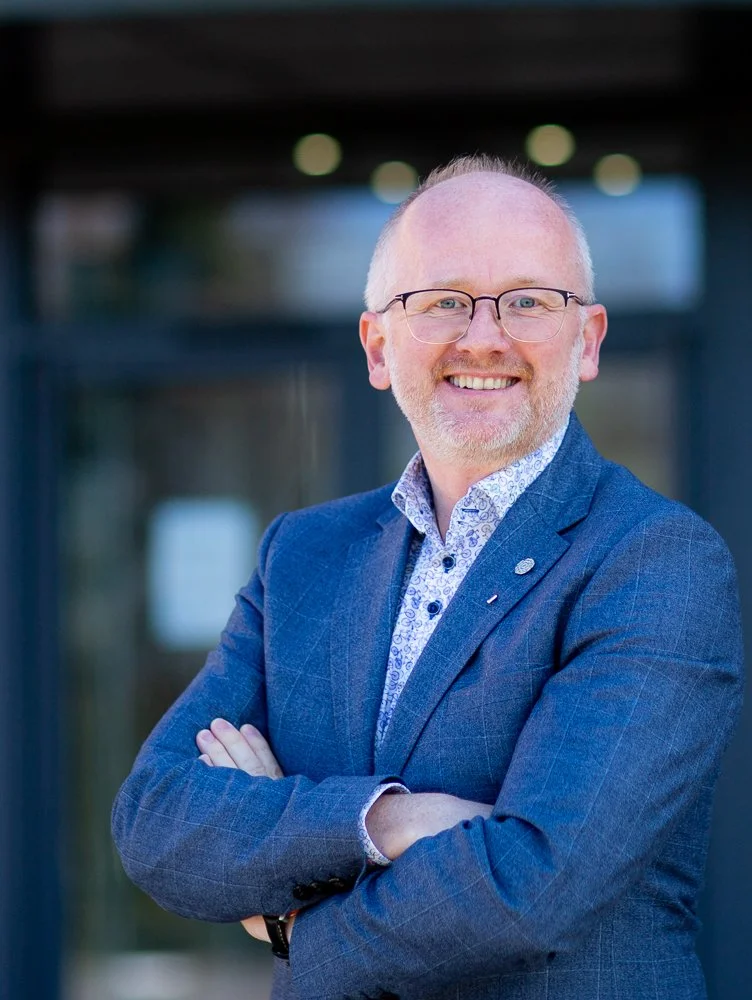
I'm Andrew Jackson. I've spent the last decade chairing peer boards and coaching SME owners, mostly in Yorkshire.
Before that, twenty years in business that took me from a mailroom to chief executive of a £300m global company. I've sat in most of the chairs you've sat in, and probably a few you haven't.
Chairing peer boards isn't new for me. I was a chair for The Alternative Board for several years, and the core mechanics of The Stray Board owe a great deal to that experience. The Board itself is different in shape and posture, but the fundamentals of how a peer board actually works were learned there.
I've also been on your side of the table. I've been a part-owner in two SMEs, one of which I helped build, grow and sell. So I know what running an SME is actually like. The pressure, the loneliness, the moments when it's brilliant and the moments when it isn't. That's a different kind of knowledge from the corporate years, and the Board is where it gets used.
What I do as Chair is hold the structure, keep the focus, and push when pushing is useful. The Board belongs to its members. The work is yours. My job is to make sure the room earns its place in your month.
The Practical Bits?
Their is only one Stray Board. It has six members, full stop. When the seats are taken, the Board is closed until one comes free.
Membership starts with a conversation. Twenty or thirty minutes on Zoom to talk through where you are, what you're looking for, and whether the Board is the right fit on both sides. Chemistry matters. The room only works if the mix of people is right. If it is, we book a longer meeting to go deeper. If it isn't, I'll say so, and point you somewhere better suited where I can.
The Board is in Harrogate, at Rudding Park. Members typically come from across Yorkshire including Harrogate, Leeds, York and the surrounding areas.
There's no contract beyond a month's notice. Fees are monthly. The Stray Board is my practice, not a franchise. I chair the Board myself, I run the business myself, and I'm not expanding beyond Yorkshire. The Stray Board is a single, exclusive and confidential peer board that has my full attention. I will not be launching any further boards.
If Any Of This Sounds Like The Room You Want To Be In.
The next step is a conversation. No pitch, no script. Twenty or thirty minutes on Zoom to talk about where you are, what you're looking for, and whether The Stray Board is the right fit. If it is, we book a longer face to face meeting to go deeper. If it isn't, I'll say so.
Frequently Asked Questions
-
Fees are monthly and we discuss them properly in the discovery conversation. They sit in the range you'd expect for a serious peer board chaired by someone with this experience. If cost is a deal-breaker you'll know quickly. If it isn't, we'll talk about value.
-
Membership starts with a Zoom conversation. Twenty or thirty minutes to talk through where you are, what you're looking for, and whether the Board is the right fit on both sides. I also need to check that there are none of your competitors already on the board as it only works with non competing businesses. If we both think membership looks promising, we book a longer meeting to go deeper. If it doesn't, I'll say so, and point you somewhere better suited where I can.
-
Members are asked to attend at least ten of the twelve meetings each year. Life happens, and the occasional miss isn't a problem. If it becomes a pattern, we'd have a conversation about whether the Board is still working for you. Fees are payable whether or not you attend in a given month.
-
Three things. It's smaller, six members rather than eight, ten or more. It's mine, not a franchise, and I run just one, exclusive Board so it gets my full attention. And it's deliberately local, anchored in Harrogate with members from Yorkshire.
-
Then we'd talk about one-to-one work instead. Straywise also offers ongoing monthly coaching as a separate arrangement. Same posture, different format. The right choice depends on what you're trying to do and what suits your situation.
-
Board One is recruiting now, with the first meeting planned for autumn 2026. The Board launches with the right six members, not on a fixed date for its own sake.